
Cash Games vs. Tournament Poker: Which Should You Play?
Poker comes in many forms, but the two most popular formats are cash games and tournaments. Each offers a unique experience, strategy, and style of play. Choosing the right format depends on your goals, bankroll, skill level, and the kind of poker experience you enjoy. This guide breaks down the differences, benefits, drawbacks, and strategies for cash games and tournaments so you can make an informed choice.
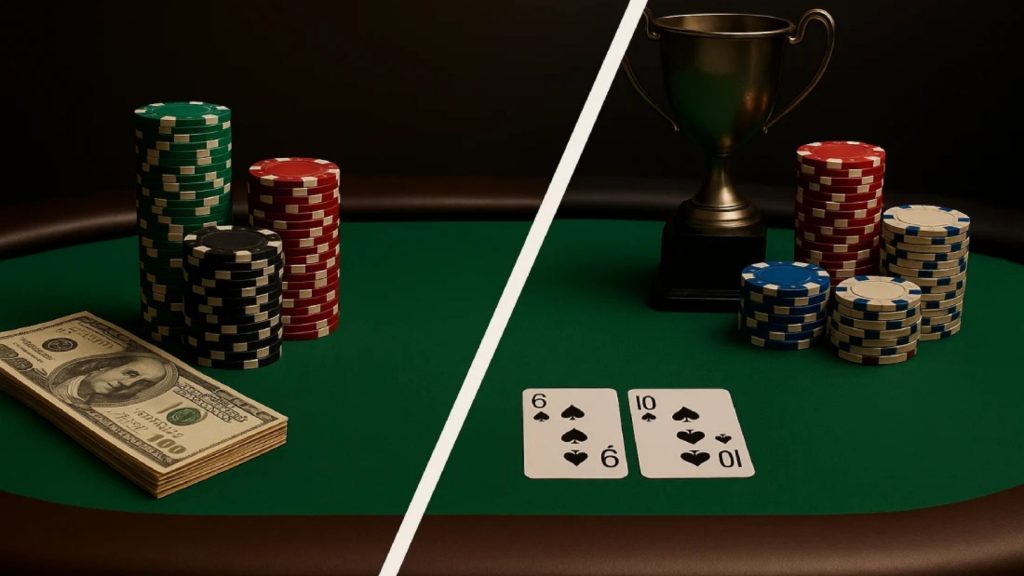
What Are Cash Games?
Cash games, also called ring games, are standard poker games played for real money. Players can join or leave the table at any time, and chips represent real cash.
Key Features
-
Flexible buy-ins: You can buy in for different amounts.
-
Real money: Each chip is worth actual money.
-
No time limit: You can play for hours or leave anytime.
-
Blinds remain fixed: Small and big blinds don’t increase.
Advantages
-
Immediate cash: You can cash out whenever you like.
-
Control over risk: You can choose stakes and table limits.
-
Consistent strategy: Standard poker strategy applies without drastic shifts.
Drawbacks
-
Limited upside: Unlike tournaments, the biggest wins are limited to the size of the pot.
-
Requires discipline: It’s easy to lose money if you play too long or make poor decisions.
What Are Poker Tournaments?
Poker tournaments are events where players buy in for a fixed amount and compete until one player wins all the chips.
Key Features
-
Fixed buy-in: Everyone pays the same amount to enter.
-
Progressive blinds: Blinds increase at regular intervals.
-
Elimination format: Once you lose all your chips, you’re out.
-
Prize structure: Top finishers receive a larger payout, often much higher than their buy-in.
Advantages
-
Huge potential payout: Small buy-ins can lead to large winnings.
-
Exciting gameplay: Rising blinds create tension and action.
-
Level playing field: Every player starts equal in chips.
Drawbacks
-
Risk of elimination: You can lose your entire buy-in quickly.
-
More variance: Luck plays a bigger role in short-term results.
-
Time commitment: Tournaments can last hours or even days.
Key Differences Between Cash Games and Tournaments
| Feature | Cash Games | Tournaments |
|---|---|---|
| Buy-in | Flexible | Fixed |
| Chip Value | Real money | Tournament chips (not cash) |
| Blinds | Fixed | Increase over time |
| Strategy | Consistent | Adjusts with chip stacks & blinds |
| Risk | Controlled | Higher variance |
| Payout | Each hand can win money | Only top finishers win |
| Session Flexibility | Can leave anytime | Must play until elimination or finish |
Which Should You Play?
1. Choose Cash Games If:
-
You want consistent income from poker.
-
You prefer low-risk, steady gameplay.
-
You like controlling your session length and stakes.
-
You enjoy deep-stack strategy and slow, thoughtful play.
2. Choose Tournaments If:
-
You want the chance for a huge payout from a small buy-in.
-
You enjoy high-pressure, exciting gameplay.
-
You like strategy that changes with rising blinds and short stacks.
-
You don’t mind variance and long sessions for the potential big win.
Tips for Both Formats
For Cash Games
-
Start with low stakes to build skill.
-
Use solid bankroll management (e.g., 20–40 buy-ins for your limit).
-
Focus on positional play and hand selection.
For Tournaments
-
Understand the blind structure and payout distribution.
-
Play tight early and aggressive late.
-
Adjust strategy based on stack size relative to blinds.
-
Learn to exploit opponents’ mistakes in short stacks.
Conclusion
Choosing between cash games and tournament poker depends on your style, goals, and risk tolerance. Cash games offer consistent play, control, and immediate cash, while tournaments offer high potential payouts, excitement, and dynamic strategy. Many serious poker players enjoy a mix of both, adapting their play based on mood, bankroll, and opportunity.
Whether you prefer steady hands or big swings, understanding the differences helps you make smarter decisions and enjoy poker to the fullest.

How psychology influences decision-making at the poker table
Short deck poker changes traditional hand values

Omaha poker games offer bigger pots and swings
About The Author
